
OPEN MONDAY-FRIDAY
02 9725 2611
LOW PRICES

Used Honda engines are known for their durability and ability to deliver reliable performance over high kilometres, making them a practical option when a replacement motor is needed. However, reputation alone does not guarantee that every second-hand engine is a good investment. Honbits helps customers assess used engines by looking at their condition, history, compatibility and testing.
Mileage is only one part of the picture. The donor vehicle's history, engine code, service records, physical condition and test results can reveal how well an engine has been maintained and how much usable life it may have left.
For customers comparing engines from Honda wreckers, knowing what to check before buying can help avoid costly problems and make it easier to choose a replacement that offers dependable performance and long-term value.
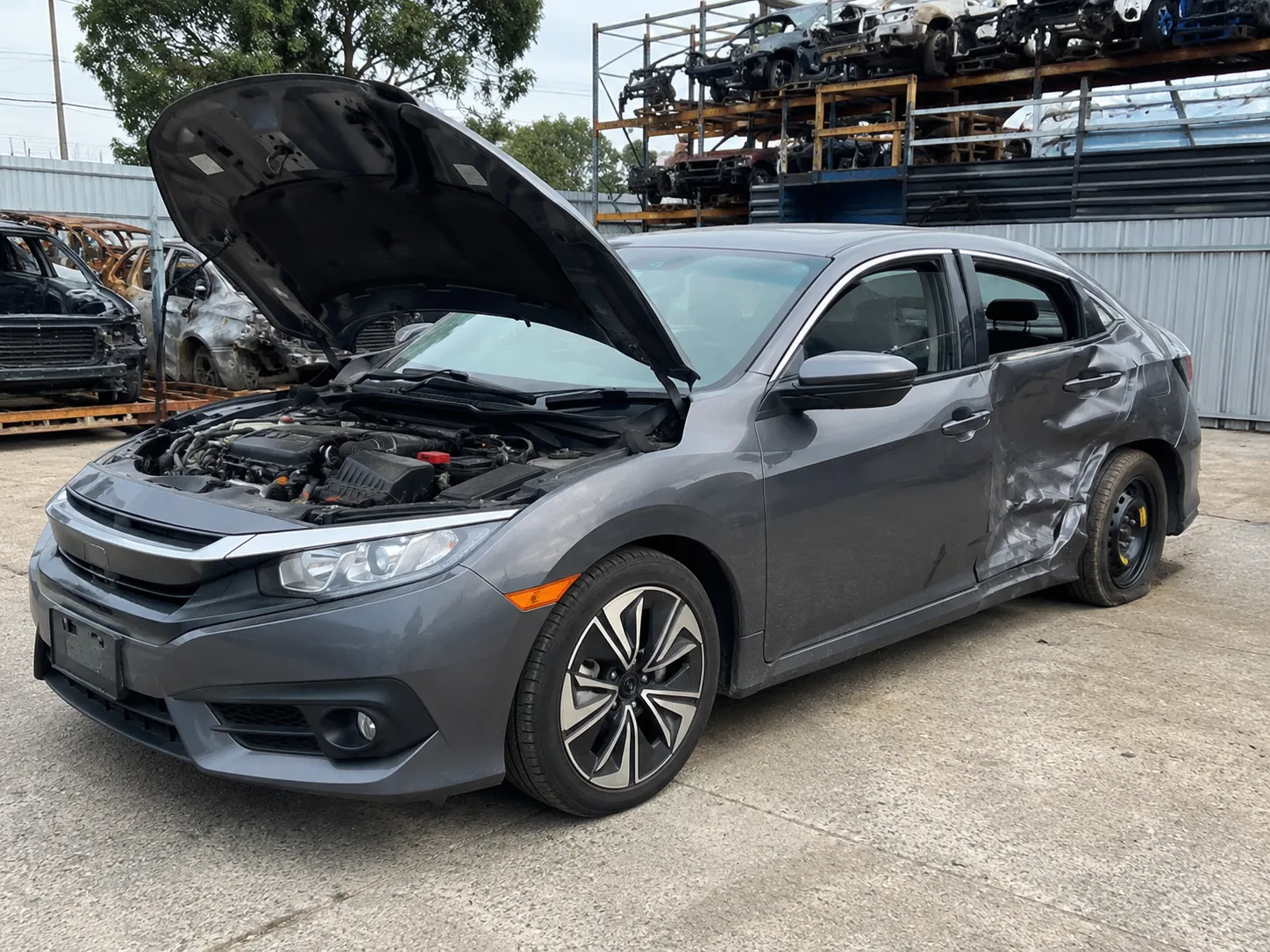
A written-off Honda does not automatically mean its engine is damaged or unreliable. Vehicles can be declared a total loss because repairing the body, safety systems or other components is too expensive, even when the engine remains in good mechanical condition. In NSW, written-off vehicles may still be bought and sold for parts or scrap, even though restrictions apply to returning written-off vehicles to the road. This makes some written-off Hondas a useful source of replacement engines, provided the donor vehicle and engine are carefully assessed.
The type and location of the damage are important. A side or rear impact may leave the engine completely untouched, while front-end damage needs closer inspection because it can affect the engine block, cylinder head, mounts and attached components. Theft recovery and some cosmetic damage can also result in a vehicle being written off without engine problems.
Before buying an engine from a written-off Honda, buyers should check the donor vehicle's history and look for signs of:
A reputable dismantler should be able to explain why the Honda was written off and provide information about the engine's condition. Running videos, compression results and clear photographs can provide additional reassurance that the engine is worth considering despite coming from a damaged vehicle.
The kilometres on a used engine provide a useful starting point, but they should never be considered on their own. An engine with higher kilometres can still be a good purchase when it has been properly maintained, while a low-kilometre one may have hidden problems if it has been neglected or stored for long periods.
The donor vehicle's history is equally important. Understanding how the vehicle was used, why it was written off and whether it received regular servicing can provide a clearer picture of the engine's condition and remaining service life.
Mileage should be compared with the engine's overall condition. Signs such as excessive corrosion, heavy oil deposits, worn pulleys or damaged covers may not match a claimed low-kilometre one. Ask whether the timing belt or chain and related components have been replaced when applicable on higher-kilometre engines.
A very low odometer reading is not automatically better either. An older engine that spent long periods unused may have deteriorated seals or developed corrosion, while a regularly driven and serviced engine with moderate kilometres may be in better condition.
Ask why the donor Honda was written off and how it was used. An engine from a vehicle damaged at the rear or side may be less concerning than one involved in a major front-end collision. Where the donor vehicle's VIN is available, a PPSR search can help confirm its written-off status and whether it has been recorded as stolen. Service records, registration or auction information and details about previous overheating, oil starvation or warning lights can also help verify its history.
Finally, confirm the engine code and serial number against the vehicle it is intended for. The markings should be clear and consistent with the supplied documentation. Any signs of grinding, restamping or mismatched identification should be treated as a reason to investigate further before buying.
Mileage alone cannot show how much life a used engine has left. Visible wear, running behaviour and the condition of key components can reveal whether an engine has suffered from poor maintenance, overheating, oil starvation or excessive use. Buyers should inspect the engine carefully and ask the wreckers for any available testing or condition reports.
Oil or coolant residue around the rocker cover, sump, timing cover or cylinder head can indicate worn seals, gaskets or other faults. Heavy oil loss or signs of coolant mixing with the oil should be treated as a serious warning.
If possible, hear the engine running from cold through to normal operating temperature. Persistent knocking, tapping or metallic rattling can indicate internal wear, bearing problems or timing component issues.
Blue smoke can indicate oil consumption, while persistent white smoke after warm-up may suggest coolant entering the combustion chambers. Excessive black smoke can point to fuel or engine management issues. Some vapour during a cold start can be normal in cooler conditions, so exhaust smoke should be assessed once the engine reaches operating temperature.
Discolouration, heavy corrosion, damaged seals and thick oil deposits may indicate previous overheating or poor maintenance. Ask whether the donor vehicle had any history of overheating, low oil pressure or cooling system problems, as previous overheating can affect components such as the cylinder head and head gasket.
Look for cracks, impact marks, damaged mounting points and stripped threads, particularly if the engine came from a written-off vehicle. Clear photographs and inspection before purchase can help identify problems that could make the engine unsuitable for installation.
Testing a used engine before purchase helps confirm its mechanical condition and identify problems that may not be obvious from its appearance or advertised kilometres. A reputable supplier should be able to explain what checks have been completed and provide relevant results rather than relying on general claims about the engine's condition. These checks are also important more broadly when buying used Honda parts, particularly mechanical components where condition and previous use can affect reliability.
Ideally, testing should begin while the engine is still in the donor vehicle and continue after removal. Important checks include:
The results should be documented where possible, giving the buyer a clearer picture of the engine's condition before payment. Suppliers who are unwilling to provide basic testing information should be approached with caution.
Finding a used Honda engine that fits correctly requires more than matching the engine size. Differences in engine codes, model years, transmissions, mounts, sensors and electronics can create expensive problems during installation. Confirming compatibility before purchase helps avoid delays and unexpected modification costs. It is important to check engine compatibility carefully rather than assuming that an engine from the same Honda model will be interchangeable.
Before buying, work through these key checks:
When there is any doubt about compatibility, provide the supplier with the vehicle's VIN and existing engine details before purchasing. This gives the supplier a better opportunity to confirm the correct replacement and reduces the risk of receiving an engine that cannot be installed as expected.
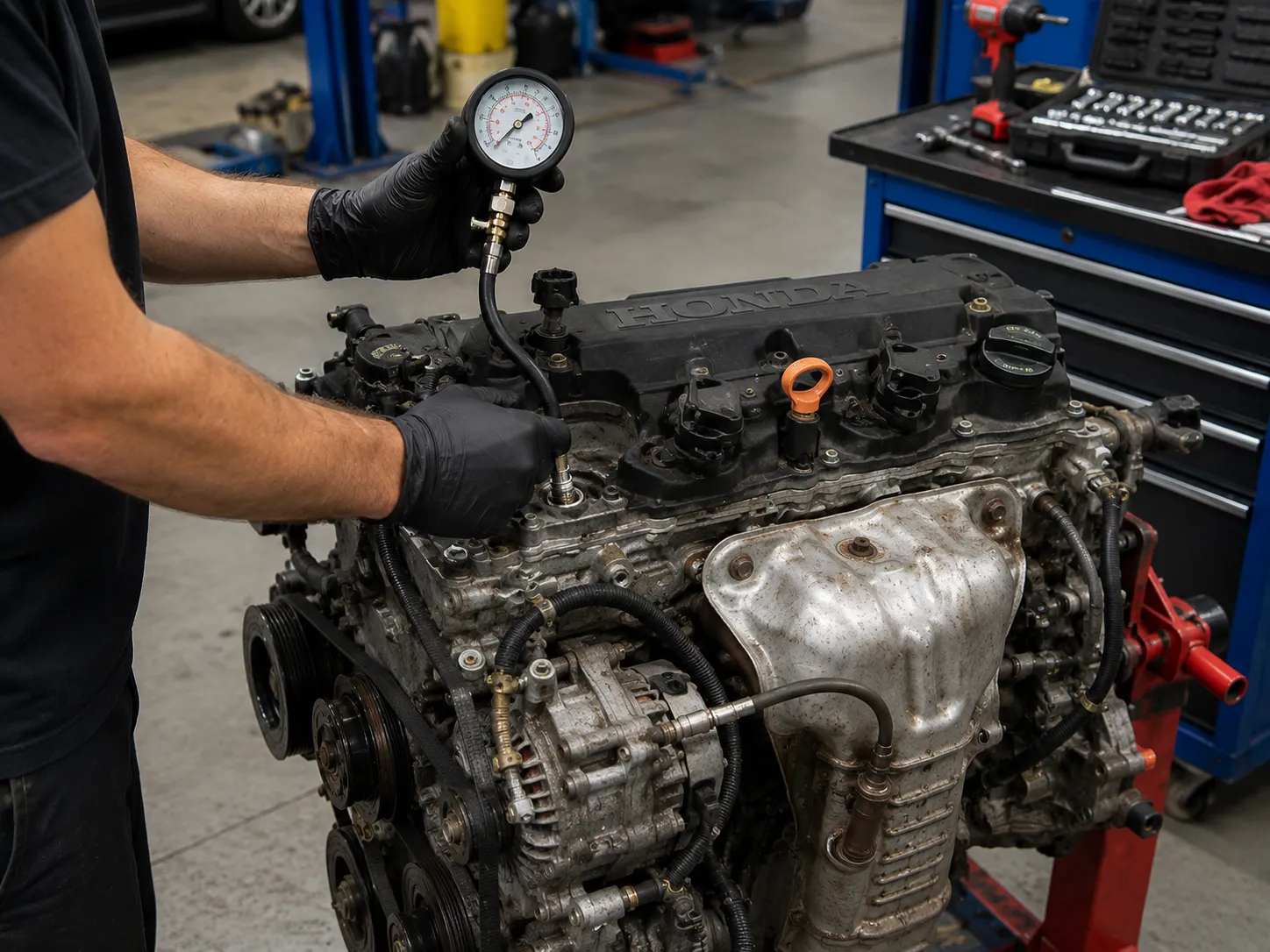
Choosing between a bare engine and a complete engine depends on what can be reused from the original Honda and how much work is required for the replacement. A bare or long-block engine includes the main internal components, while a complete engine may come with several external components already fitted.
A bare engine can be a good option when the original alternator, starter, manifolds, sensors and other ancillaries are still in good condition and compatible with the replacement. Reusing these components can also help maintain compatibility with the vehicle's existing wiring and electronics.
However, the term "bare engine" can vary between Honda wreckers, so buyers should confirm exactly what is included before comparing prices.
A complete engine may be more suitable when several components from the original engine are damaged, worn or missing. Depending on the supplier, it may include manifolds, injectors, sensors, throttle body, starter motor or alternator, reducing the number of parts that need to be sourced separately.
Confirm what "complete" actually includes. The ECU, wiring loom, immobiliser components and transmission are often sold separately unless specifically included in the package.
The price can vary on whether it is sold as a bare or complete unit, so buyers should confirm exactly what is included before comparing quotes. A clear breakdown helps avoid unexpected costs during installation and ensures the replacement engine is suitable for the vehicle.
A typical used engine may include the block, cylinder head and internal components, along with timing components. Some suppliers may also leave parts like the intake and exhaust manifolds, fuel rail, injectors or coils attached, but these extras are not always tested or covered by the same warranty.
Several important items are commonly sold separately, including:
Buyers should also allow for installation costs and preventative maintenance. Replacing gaskets, seals, fluids and timing components where the service history is unknown can help improve reliability after installation. Labour, diagnostics, shipping and possible core charges may also add to the final cost.
A warranty can provide valuable protection when buying a used Honda engine because the unit has already been used in another vehicle. However, warranty terms vary between wreckers, so buyers should understand exactly what is covered before paying for an engine.
Confirm how long the warranty lasts and when it starts. The coverage period may begin from the purchase date or installation, depending on the supplier. Always request the warranty terms in writing rather than relying on verbal assurances.
Warranty coverage may apply to major internal components such as the block, cylinder head, crankshaft, pistons and camshafts. Seals, gaskets, sensors and bolt-on components like alternators or air conditioning compressors may have limited coverage or be excluded altogether.
This is important with a bare engine, where several components from the original motor may need to be transferred.
Some warranties require installation by a qualified mechanic and replacement of items before the engine is started. There may also be requirements to keep invoices or provide installation and servicing records.
Understanding these conditions beforehand can help prevent a valid mechanical issue from becoming a rejected warranty claim.
Find out whether the supplier offers a repair, replacement engine or refund if a covered fault occurs. Labour for removing and reinstalling the engine may not be included, so this should be clarified before purchase.
A reputable wrecker should provide clear warranty terms covering the duration, exclusions, installation requirements and claim process. Keeping the engine details, purchase records and testing information can also make any future claim much easier to manage.
Used Honda engines can be a reliable and cost-effective replacement when the right checks are completed before purchase. Honbits recommends looking beyond mileage by verifying the engine code, compatibility, donor history and test results while checking for leaks, unusual noises, overheating and other signs of wear.
Buyers should also consider the engine's warranty, included components and total installation costs rather than focusing only on the asking price. Taking this approach makes it easier to choose a well-documented replacement and get the dependable performance, longevity and value expected from a Honda engine.
Delivery to Trade is made twice daily Sydney wide. Delivery is also available Australia wide
To enquire about our current available stock and/or pricing please call our friendly staff on (02) 9725 2611 or click here to send us an email enquiry.

